What your readers can do with it
The 90/180 rule is simple to state and easy to get wrong: on any day, the stays in the last 180 days, counting that day, must add up to 90 days or fewer. Entry and exit days both count, and the window moves every day. The Schengen calculator does the counting:
- Your Schengen trips: one row per stay, entry and exit date, with an optional label. A trip still going can have an empty exit date.
- Check a date: days used and days left in the 180-day window ending that day, the window dates and a strip with the stay days shaded.
- Plan a trip: the latest exit for an entry date, the earliest date with room for a stay of a set length, or a check of a planned trip that flags the first day over the limit.
- Days in a country: a separate counter of days spent in each country over a year or a period, for tax residence questions.
Every answer has a "How this was counted" section that lists the days, so readers can follow the count rather than trust it.
Where it fits
Put it inside a post on the 90/180 rule, right after the explanation, so readers test their own dates while the rule is fresh. Itinerary guides for long trips through Europe can use the Plan a trip box, and a digital nomad site can embed the Days in a country tab on a page about tax residence. Since the rule decides whether someone overstays, say plainly on your page, as the widget does, that border officers and the official EU calculator have the final word.
Suggested size
The default frame is 1,200 px high and up to 960 px wide. With two or three trips that shows the trip list, the date check with its strip and most of the planning box; the rest scrolls inside the frame, and each extra trip adds a row. On a phone the tool is about 1,810 px tall. A travel blog read mostly on phones can use 1,400 px as a middle ground.
Open it on a worked example
A link can fill in the trips, the date to check and a plan. This one uses three trips in 2024, checks 19 June and asks for the earliest entry from 1 July that leaves room for 30 days in a row:
https://widemath.com/embed/schengen-calculator/?t=2024-01-01_2024-01-10,2024-03-01_2024-03-30,2024-05-01_2024-06-09&d=2024-06-19&pl=e:30:2024-07-01
On 19 June 2024 the traveller has used 80 of 90 days, so a stay starting that day can last only until 8 July. The earliest entry with room for 30 days is 8 August 2024, staying until 6 September. That gap surprises most readers, and it is the point of the rule.
Add it in three steps
- Load the example, or keep the default sample trips that readers replace with their own, then press Copy embed code.
- Paste it into the post: a Custom HTML block in WordPress, an HTML embed in Ghost or a Code block in Squarespace.
- Add one line telling readers to enter every stay in the Schengen area from the last six months, not only the last trip.
Frequently asked questions
Is the widget legal advice?
No. It counts days under the 90/180 rule. It is not legal advice, and border officers and the official EU calculator decide. A note at the bottom of the widget says so too.
Do entry and exit days both count?
Yes. A trip from 1 June to 20 September 2024 counts as 112 days, and a same-day visit counts as one day.
Can readers count days in one country for tax?
Yes. The Days in a country tab counts days per country over a calendar year, a rolling 12 months or a period you set, and can count midnights only where a country's rule works that way.
More calculator widgets
Want the explanations and worked examples as well? They are on the full Schengen Calculator page. All 24 widgets, each with a Copy code button, are in the calculator widget gallery.
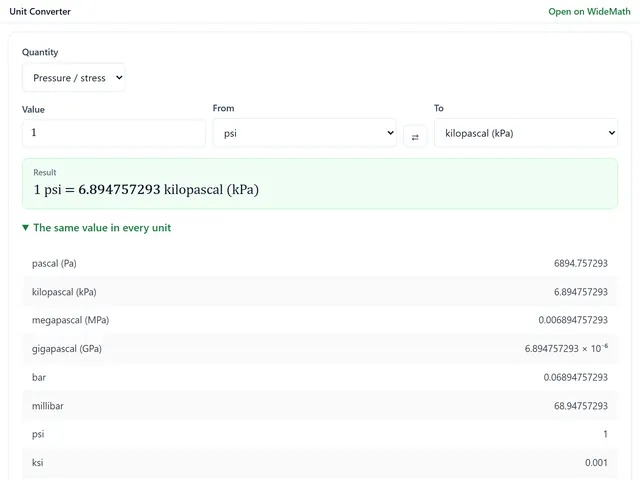
Unit Converter
19 engineering quantities, every unit at once, and a free-form box for compound units.
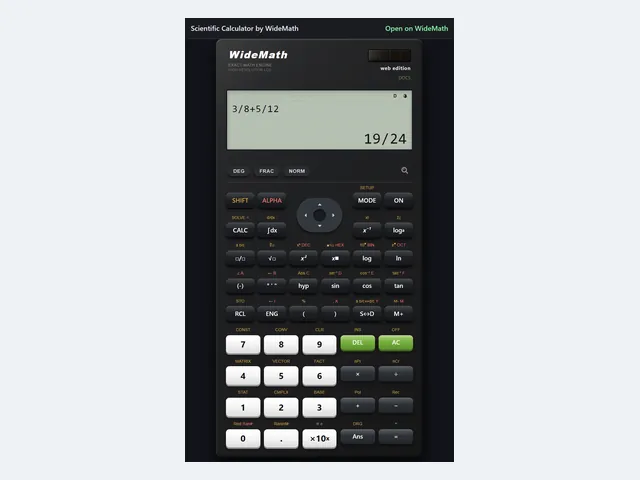
Scientific Calculator
A Casio-style keypad with exact fractions and eight modes, narrow enough for a sidebar.
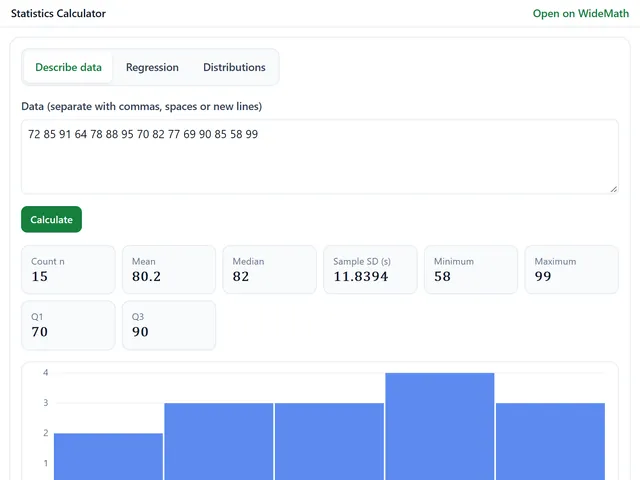
Statistics Calculator
Mean, SD, quartiles, regression with R², and normal, t, chi-square and F probabilities.